Cyber Law Lawyer in Lucknow
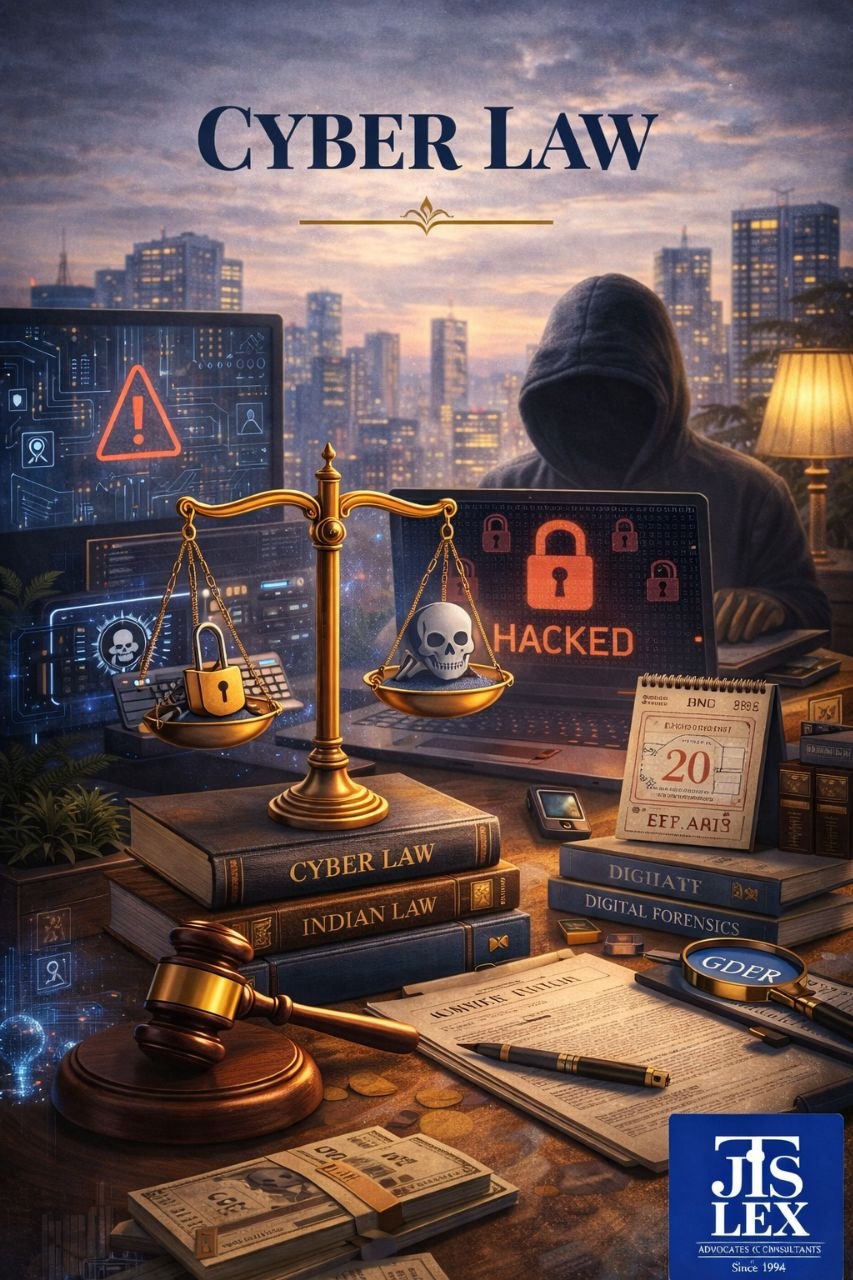
The Evolution of Criminal Jurisprudence: From Sin to Cybercrime
Historically, "crime" was inextricably linked to religious morality; the distinction between a sin and an offense was virtually non-existent. As sovereign states evolved, crime transformed into a social and political phenomenon—a legal wrong backed by state sanctions.
Today, as defined by jurist Granville Williams, a crime is a legal wrong followed by criminal proceedings that result in punishment. In the modern era, this "wrong" has migrated from the physical world to the digital realm, giving rise to Cybercrime: illegal, unethical, or unauthorized behaviour relating to the automatic processing and transmission of data.
Core Categories of Cyber Offenses
While Indian law does not provide a single exhaustive definition of "Cybercrime," the following activities represent the primary threats in the current legal landscape:
| Offense Type | Legal Description |
|---|---|
| Hacking | Unauthorized intrusion into a computer system to steal or spoof data. |
| Phishing / Vishing | Using deceptive emails or voice calls to steal sensitive credentials like passwords and CC details. |
| Identity Theft | Fraudulent use of another person's digital signature, password, or unique ID feature. |
| Cyber Terrorism | Politically motivated attacks intended to threaten the sovereignty or security of the nation. |
| Data Alteration | The intentional destruction, concealment, or alteration of computer source code. |
| Cyber Warfare | Internet-based conflict involving attacks on critical state information infrastructure. |
The Indian Statutory Framework
India adopts a dual-layered approach to digital offenses, utilizing both the specialized Information Technology (IT) Act, 2000, and the conventional Indian Penal Code (IPC).
I. The Information Technology Act, 2000 (Amended 2008)
Based on the UNCITRAL Model Law, the IT Act is the primary legislation governing e-commerce and cybercrimes in India.
| Section | Nature of Offense | Prescribed Punishment |
|---|---|---|
| Sec. 65 | Tampering with computer source documents | Up to 3 years imprisonment / ₹2 Lakh fine |
| Sec. 66 | Hacking and data destruction | Up to 3 years imprisonment / ₹5 Lakh fine |
| Sec. 66C | Identity Theft | Up to 3 years imprisonment + ₹1 Lakh fine |
| Sec. 66E | Violation of Privacy (publishing private images) | Up to 3 years imprisonment / ₹2 Lakh fine |
| Sec. 66F | Cyber Terrorism | Life Imprisonment |
| Sec. 67 | Publishing Obscene material in electronic form | 5–10 years’ imprisonment + Fine |
| Sec. 69 | Power to intercept/decrypt information | Up to 7 years imprisonment (for non-compliance) |
II. Interplay with the Indian Penal Code (IPC)
- Sec. 463 (Forgery): Forgery of electronic records or email spoofing.
- Sec. 420 (Cheating): Bogus websites and online financial frauds.
- Sec. 499/500 (Defamation): Sending defamatory messages via social media or email.
- Sec. 503 (Criminal Intimidation): Threatening messages sent electronically.
- Sec. 383 (Extortion): Web-jacking or ransomware attacks.
Critical Challenges & Global Jurisdiction:
While the substantive laws in India are robust, the procedural execution remains a challenge due to the technical and borderless nature of the internet.
- Technical Sophistication: Criminals constantly evolve their methods (e.g., SMS spoofing, domain hijacking), often staying a step ahead of procedural law.
- Transnational Jurisdiction: Under Section 75 of the IT Act, India claims jurisdiction over offenses committed outside its borders if the act involves a computer located in India. However, successful prosecution relies heavily on international cooperation and mutual legal assistance treaties (MLATs).
- Evidentiary Issues: The preservation of digital footprints requires specialized forensic expertise, as governed by the Bankers’ Book Evidence Act and the Indian Evidence Act.
The Indian legal framework has matured significantly since the inception of the IT Act in 2000. However, for a law firm representing corporate or individual interests, the focus must shift from mere compliance to proactive cyber-resilience. Legal remedies are available, but their success depends on the swift technical preservation of evidence and an understanding of the overlapping jurisdictions between the IT Act and the IPC.
Our Viewpoint:
As the digital landscape in India shifts from a simple e-commerce framework to a complex battlefield of cyber warfare and sophisticated financial fraud, the role of legal counsel has evolved from reactive litigation to strategic risk management.
At JTS Lex, we bridge the gap between traditional criminal jurisprudence and the nuances of the digital age. Our approach integrates the technical rigor of the Information Technology Act with the established principles of the Indian Penal Code to ensure that our clients—whether corporate entities or individuals—are not only legally protected but also digitally resilient.
JTS Lex: Overview & Core Competencies
JTS Lex is a premier legal firm dedicated to providing comprehensive and multi-disciplinary legal solutions. With a strong foundation in criminal and corporate law, we specialize in navigating the complexities of modern-day offenses.
| Service Pillar | Description |
|---|---|
| Cyber Litigation & Defense | Representing clients in cases of data theft, hacking, and online financial fraud before Adjudicating Officers and High Courts. |
| Corporate Compliance | Ensuring business operations align with the IT Act (2008 Amendment) and emerging data protection standards to mitigate liability. |
| Evidentiary Forensics | Collaborating with technical experts to preserve "digital footprints" in a manner that satisfies the strict requirements of the Indian Evidence Act. |
| Strategic Advisory | Providing counsel on cross-border jurisdictional issues and the interplay between specialized IT laws and traditional criminal statutes. |
In an era where a "wrong" is no longer confined to physical boundaries, JTS Lex stands as a steadfast partner in justice. We believe that legal success in the digital realm requires more than just knowledge of the law; it requires a deep understanding of the technology behind the crime. Our commitment is to provide clear, actionable, and robust legal strategies that safeguard your interests in an increasingly interconnected world.